
Home / For insurers
For insurersRedefining clinical and financial outcomes
Evidence-based and value-based programs deliver a clinical and financial solution for low back and neck pain.
Ask us a question
Low back injuries are costly.
Patients who incur substantial medical and compensation costs often have spinal surgery that can range from $25,000 to $250,000 or more.1 The average workers comp settlement for low back injuries ranges from $45,000 to $500,000 or more.1
1 Figures as published by Converge Medical Technology. See outcomes and research
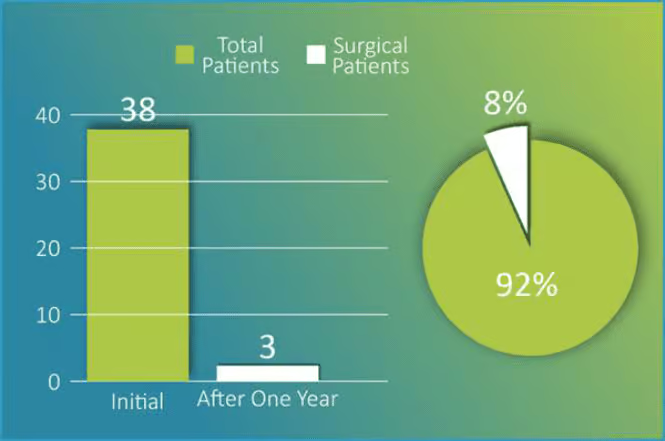
38 patients were recommended for spinal surgery.
Surgical procedures included fusion, discectomy, laminectomy.
1 Figures as published by Converge Medical Technology. See outcomes and research
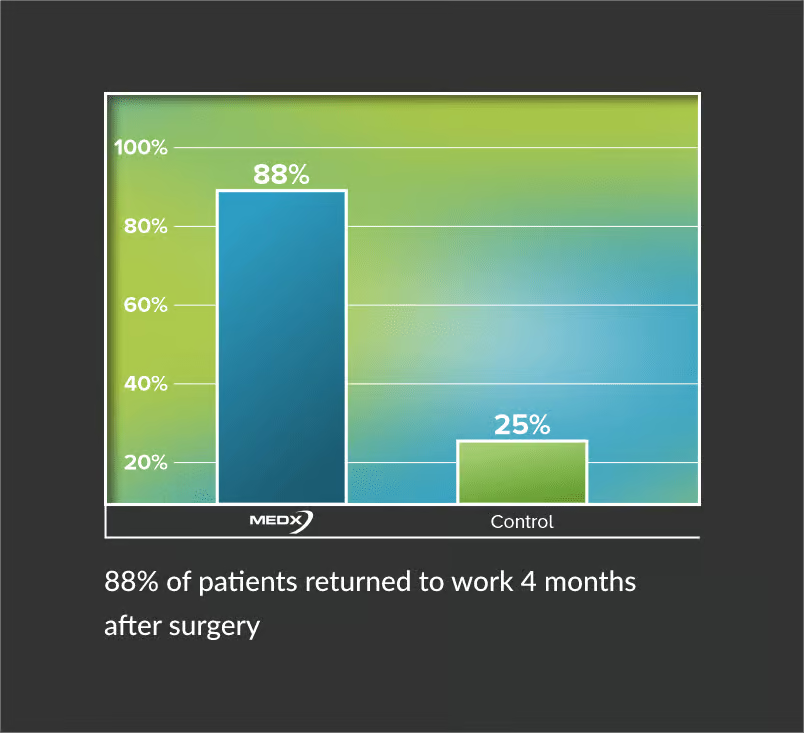
Faster return to work with MedX
Patients using the MedX lumbar extension device have been shown to return to work faster than those not using the MedX device after lumbar disc surgery.
2 Figures as published by Converge Medical Technology, citing “The effect of early isolated lumbar extension for patients with herniated disc undergoing lumbar laminectomy” and “The clinical effects of intensive, specific rehab on chronic low back pain - a controlled study of 895 consecutive patients with 1-year follow up.” See outcomes and research
The approach, in detail.
The Converge multidisciplinary approach
Poor spinal muscle strength, endurance and strong fear-avoidant behavior after injury often lead to prolonged work restrictions, absenteeism and increased costs. Addressing these underlying risk factors after injury is the cornerstone of the multidisciplinary approach used by Converge Medical Technology.
- Pelvic stabilization and lumbar isolation
- Evidence-based approach
- Successful patient outcomes
- Improved low back and cervical strength
- Increased flexibility and range of motion
- Increased activity levels
- Better sleep quality
- Improved upper and lower body strength
- Mindfulness and meditation activities
Evidence-based care and lumbar isolation

Use of the MedX lumbar extension device is supported by over 75 research articles.1 Most low back programs focus on core rehabilitation and not specific low back strengthening. Without specific isolation of the lumbar muscles, atrophy is not reversed, and patients often fail to achieve desired results.
Pelvic stabilization targets the low back muscles. Non-isolated low back strengthening engages the gluteal and hamstring muscles. The erector spinae and multifidus muscles are the weak link between the upper and lower body when moving and are very susceptible to injury.
1 Figures as published by Converge Medical Technology. See outcomes and research
Request more information.
Call us or send us a question about how MedX cuts costs.